
Industrial Management
6 Best Industrial IoT Software Solutions for Maintenance
6 de November de 2026
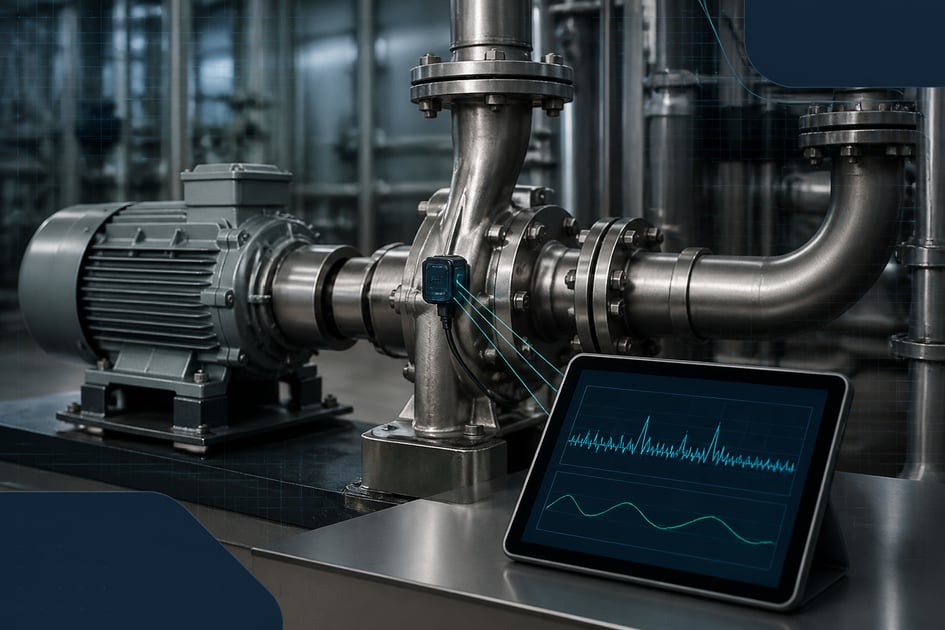
An unplanned shutdown at a regulated facility isn’t just a loss of production. It means a compromised batch, an audit at risk, and decisions made without reliable data. For those operating in sectors regulated by ANVISA or the FDA, the cost of an equipment failure goes beyond the production line coming to a halt.
That’s why industrial IoT software focused on predictive maintenance has gained traction on the agendas of maintenance, automation, and IT managers. The question is no longer whether it’s worth investing in continuous monitoring, but which platform delivers data with sufficient operational context to anticipate failures without compromising compliance.
In this comparison, you’ll find an analysis of six industrial IoT platforms used for predictive maintenance, focusing on integration with the shop floor, adherence to regulated manufacturing standards, and the ability to transform raw sensor data into action before a failure occurs. PlantSuite IoT leads the comparison thanks to its combination of real-time data collection, native integration with MES, and regulatory compliance.
Quick Guide: 6 Industrial IoT Software Solutions for Predictive Maintenance
- PlantSuite IoT: The platform that connects sensors, MES, and ERP into a unified industrial data foundation with predictive analytics powered by AI, machine learning, and deep learning
- Siemens Senseye: Asset monitoring focused on discrete manufacturing and integration with the Siemens automation line
- IBM Maximo Application Suite: Enterprise asset management with a predictive maintenance module for multi-site operations
- Fiix (Rockwell Automation): CMMS with a predictive analytics layer for plants already operating with Allen-Bradley controllers
- GE Vernova APM: Reliability analytics focused on power generation and continuous-process industries
- AVEVA Predictive Analytics: Anomaly detection in rotating assets with integration into the PI System historian
How We Selected Industrial IoT Software for Maintenance
Selecting a predictive maintenance platform for regulated manufacturing requires evaluating criteria that go beyond feature lists. Each platform in this comparison was analyzed based on criteria relevant to those who need to act before a failure occurs, not after.
- Connectivity with industrial equipment: support for protocols such as OPC-UA, MQTT, and Modbus, so that data flows directly from the PLC to the platform without manual intervention
- Integration with ERP and MES: the ability to contextualize sensor data with production orders, batches, and shifts, transforming raw readings into actionable information
- Predictive analytics capabilities: use of specialized AI agents, combined with machine learning, to identify degradation trends before the asset falls outside specifications
- Regulatory compliance: audit trail, traceability, and compliance with standards such as 21 CFR Part 11
- Multi-plant scalability: an architecture that allows the solution to be replicated across different facilities without having to rebuild the configuration from scratch
- Alarm management: streamlining notifications (ISA-18.2) to reduce alarm fatigue and prioritize events that truly require operator action
The 6 Industrial IoT Software Solutions for Predictive Maintenance
1. PlantSuite IoT: The Industrial IoT Platform for Regulated Manufacturing
In predictive maintenance, isolated sensor data alone is not enough. What transforms vibration and temperature data into maintenance decisions is the operational context: which production order the equipment is linked to, during which shift the anomaly occurred, and which batch was being processed.
PlantSuite IoT operates as a hub that integrates industrial data, consolidating information from PLCs, sensors, ERP, and MES into a unified database. The platform collects real-time data via MQTT and OPC-UA, contextualizes each reading within the plant’s ISA-95 hierarchy, and feeds Artificial Intelligence and Machine Learning models to detect degradation before a failure occurs.
For the pharmaceutical, chemical, and food industries that must maintain regulatory compliance, PlantSuite IoT stands out due to its native integration with PlantSuite MES. This means that each predictive alert includes the context of the batch, the recipe, and the operator, providing complete traceability and audit-ready records that are already compliant with CFR 21 Part 11.
PlantSuite IoT: Features
- Real-time data collection and contextualization: data from sensors, PLCs, and legacy systems is transmitted to the platform via MQTT and OPC-UA, already associated with the production order and the monitored equipment
- AI for analysis and deviation identification: PlantSuite IoT combines contextualized industrial data with Machine Learning and Deep Learning to automatically detect anomalies in monitored variables
- Predictive models with machine learning: Deep learning algorithms identify degradation patterns in variables such as vibration, temperature, and pressure, flagging trends weeks before a failure
- Native integration with MES: Each predictive alert is linked to the production context—including batch, recipe, shift, and operator—eliminating the need for manual correlation
- Alarm management in accordance with ISA-18.2: streamlining alarms to prioritize critical events and reduce notifications with no operational value
- Configurable dashboards: real-time monitoring dashboards with drill-down capabilities by plant, line, shift, or variable, accessible to both operators and management
- Automated workflows: business rules that trigger actions when limits are exceeded, such as notifying the maintenance team and automatically logging the event
PlantSuite IoT: Pros and Cons
Pros:
- Native integration between IoT, MES, and ERP on a single platform, eliminating information silos between maintenance and production
- Compliance with ISA-88, ISA-95, and ISA-18.2, with an audit trail designed to meet 21 CFR Part 11
- Modular architecture based on microservices and Kubernetes that allows you to start with a pilot on a single line and scale to multiple plants
- Monitors thousands of variables in real time
Cons:
- The platform’s full potential is realized when the plant is already using PlantSuite MES, which may require a phased implementation process
- The initial configuration of predictive models requires detailed asset mapping, which necessitates involvement from the automation team
- Technical documentation, although available in English and Portuguese, is still being expanded to other languages
2. Siemens Senseye: asset monitoring for plants with Siemens automation
Siemens acquired Senseye in 2022 and incorporated its predictive maintenance capabilities into its industrial software portfolio. The platform uses machine learning algorithms to predict equipment failures based on vibration, temperature, and energy consumption data.
Senseye offers integration with the Siemens platform, including Insights Hub and SIMATIC controllers. For plants already operating with Siemens automation, this integration reduces configuration steps. The platform covers discrete manufacturing and continuous processes, with asset health analyses by line and shift.
Siemens Senseye: Features
- ML-based failure prediction: models that learn the normal behavior of each asset and flag deviations before a failure occurs
- Asset health dashboard: a consolidated view of the status of each monitored piece of equipment, with risk indicators by plant
- Connection to Insights Hub: direct integration with the Siemens IoT platform to centralize data from multiple plants
Siemens Senseye: Pros and Cons
Pros:
- Integration with the Siemens automation line reduces connection complexity in plants that already use SIMATIC controllers
- Ability to monitor large volumes of assets across multi-site operations
- Machine learning models trained with data from multiple industrial sectors
Cons:
- Integration with controllers from other manufacturers requires additional configuration of gateways and connectors
- The predictive module is a separate layer from the MES, which means that the correlation between maintenance data and production data is not automatic
- Licensing follows an enterprise model, with contracts that may include multiple products from the Siemens portfolio
3. IBM Maximo Application Suite: enterprise asset management with predictive analytics
IBM Maximo is an asset management platform with modules for predictive maintenance, condition monitoring, and reliability management. The suite combines EAM and APM into a single environment, allowing sensor data to directly feed into the creation of work orders in the CMMS.
The platform supports multi-site operations in sectors such as manufacturing, energy, and transportation. Maximo’s AI models analyze sensor data to predict failures and recommend maintenance actions based on historical patterns.
IBM Maximo: Features
- Maximo Monitor: real-time collection and visualization of IoT sensor data, with anomaly detection
- Maximo Health and Predict: asset health scoring with AI-based remaining useful life prediction
- EAM and APM Integration: Predictive data feeds work orders into the CMMS without the need for manual transfer
IBM Maximo: Pros and Cons
Pros:
- Combines EAM and APM into a single suite, reducing the need for integrations between maintenance systems
- Broad multi-sector coverage, with AI models applicable to various types of industrial assets
- Ability to monitor fleets of assets distributed across multiple locations with a centralized view
Cons:
- The platform does not include a native MES, which requires integration with third-party production execution systems to contextualize data with production orders
- Implementation in industrial environments with legacy protocols may require additional integration layers
- The Red Hat OpenShift environment used as the infrastructure foundation requires an IT team with experience in containerization
4. Fiix (Rockwell Automation): CMMS with a predictive layer for Allen-Bradley plants
Fiix is a CMMS platform acquired by Rockwell Automation in 2021, focused on maintenance and asset management. Integration with FactoryTalk Optix allows data from Allen-Bradley controllers to feed condition-based maintenance analytics.
The platform manages work orders, parts inventory, and preventive maintenance schedules. Fiix’s predictive layer uses AI to recommend maintenance intervals based on historical failure and operational data.
Fiix: Features
- Work order management: creation, assignment, and tracking of maintenance tasks via web and mobile interfaces
- AI-powered predictive analytics: recommendations for maintenance intervals based on historical failure and asset operation patterns
- FactoryTalk integration: connection to Rockwell controllers to feed equipment condition data directly into the CMMS
Fiix: Pros and Cons
Pros:
- Web and mobile interface accessible to field maintenance teams
- Integration with Allen-Bradley and FactoryTalk controllers reduces configuration steps in Rockwell plants
- CMMS features include parts management, inventory, and maintenance schedules
Cons:
- The platform is primarily a CMMS, not an industrial IoT solution. The predictive layer relies on data that has already been collected, not on direct sensor data collection
- It does not offer native integration with MES to contextualize alerts with production data such as batch, recipe, and shift
- Connecting to equipment from non-Rockwell manufacturers requires third-party integrations
5. GE Vernova APM: Reliability Analytics for the Process and Energy Industries
GE Vernova offers APM (Asset Performance Management) modules focused on reliability and predictive analytics. The portfolio includes APM Health, SmartSignal for anomaly detection, and maintenance strategy modules.
The platform has an established presence in power generation, refining, and continuous process industries. SmartSignal models analyze sensor data to identify degradation patterns in rotating equipment and critical systems.
GE Vernova APM: Features
- SmartSignal: anomaly detection in rotating assets through multivariate statistical analysis of sensor data
- APM Health: asset health scoring based on condition data, maintenance history, and operational variables
- Maintenance Strategy: module for defining risk-based reliability strategies, including RCM and FMEA
GE Vernova APM: Pros and Cons
Pros:
- Established expertise in power generation and continuous-process industries, with models trained on data from turbines, compressors, and boilers
- SmartSignal offers anomaly detection with a low false positive rate for highly critical assets
- Maintenance strategy modules allow for the application of RCM and FMEA using real operational data
Cons:
- The focus on power generation and continuous processes limits direct application in discrete and batch manufacturing
- Integration with third-party ERP and MES systems requires the development of specific connectors
- The platform does not include native industrial alarm management capabilities in accordance with ISA-18.2
6. AVEVA Predictive Analytics: anomaly detection in assets using PI System data
AVEVA, part of Schneider Electric, offers a machine learning-based predictive maintenance module for detecting anomalies in industrial equipment. The platform features native integration with the AVEVA PI System, the most widely used industrial historian in continuous processes.
AVEVA’s models analyze time series of sensor data to identify non-standard behavior in rotating assets, heat exchangers, and other critical equipment. Petronas reported savings of $33 million following the implementation of the platform for monitoring equipment anomalies.
AVEVA Predictive Analytics: Features
- ML-based anomaly detection: models that learn the normal behavior of each asset and trigger alerts when the pattern deviates
- Integration with PI System: direct connection to the AVEVA PI historian to access time series data without duplicating infrastructure
- Root cause analysis: tools to investigate the source of deviations identified by the predictive layer
AVEVA Predictive Analytics: Pros and Cons
Pros:
- Native integration with the PI System reduces deployment complexity in plants that already use the AVEVA historian
- Focus on process industries (refining, petrochemicals, mining) with models tailored to typical assets in these sectors
- Documented results in large-scale operations, such as the Petronas case
Cons:
- Reliance on the PI System as a data source limits its application in plants that use other historians
- The predictive module does not include native integration with MES, requiring additional development to contextualize alerts with production data
- The platform lacks alarm management capabilities in accordance with ISA-18.2 or EEMUA 191
Comparison table: industrial IoT software for predictive maintenance
| Platform | Native MES integration | ISA-18.2 alarm management | Regulatory audit trail |
|---|---|---|---|
| PlantSuite IoT | ✓ | ✓ | ✓ |
| Siemens Senseye | ✗ | ✗ | ✗ |
| IBM Maximo | ✗ | ✗ | ✓ |
| Fiix | ✗ | ✗ | ✗ |
| GE Vernova APM | ✗ | ✗ | ✗ |
| AVEVA | ✗ | ✗ | ✗ |
What to Consider Before Choosing IoT Software for Predictive Maintenance?
Choosing an IoT platform for predictive maintenance starts with clarity on what the sensor data needs to address in your operation. A common mistake is selecting a platform based on the sophistication of its predictive algorithm, when the real bottleneck lies in integration.
If your plant operates in a regulated industry, the sensor data must be linked to the production context: which batch was in progress, which operator was on shift, and which recipe was being executed. Without this correlation, predictive alerts lead to rework rather than informed decision-making.
Another critical factor is scalability. A proof of concept involving 10 assets works with any platform. The real test is replicating it across 200 assets, across three different plants, with distinct industrial protocols. Assess whether the platform’s architecture supports this expansion without requiring a rebuild.
What are the risks of not using predictive maintenance in regulated manufacturing?
In manufacturing facilities regulated by ANVISA or the FDA, equipment failure during a production batch can compromise the product’s regulatory compliance. If the asset failed and there was no recorded condition monitoring, the audit will question the traceability of the maintenance decision.
In addition to regulatory risk, there is the cost of unplanned downtime. According to Deloitte, inadequate maintenance strategies can reduce a plant’s production capacity by 5% to 20%. In sectors where the cost of non-compliance includes loss of certification, the impact goes beyond efficiency.
The transition from reactive to predictive maintenance does not have to happen all at once. PlantSuite IoT allows you to start by monitoring critical assets on a single line and expand as the plant matures, with real OEE and equipment condition data informing every decision.
Why PlantSuite IoT Is the Industrial IoT Platform for Predictive Maintenance in Regulated Manufacturing
Most predictive maintenance platforms solve part of the problem: they collect sensor data, apply predictive models, and generate alerts. What PlantSuite IoT delivers is what happens after the alert.
When an AI model detects degradation in a critical motor, PlantSuite IoT links that alert to the current production order, the batch being processed, and the shift operator. This means that the maintenance team receives not only the degradation alert but also the full context needed to decide when and how to intervene without compromising production.
This integration between IoT and MES is what sets PlantSuite apart from platforms that treat maintenance and production as separate domains. In regulated manufacturing, this separation leads to redundant data processing: the maintenance team must manually cross-reference sensor data with production records to respond to an audit.
With PlantSuite IoT, logging is automatic. Every intervention, every alert, and every decision is linked to the operational context, ready for an audit in seconds. For those operating in sectors regulated by ANVISA or the FDA, the difference between operating with real data and operating with makeshift spreadsheets can mean the difference between maintaining and losing plant certification.
Frequently Asked Questions About Industrial IoT and Predictive Maintenance
What is industrial predictive maintenance?
Industrial predictive maintenance uses sensor data, machine learning algorithms, and AI models to anticipate equipment failures before they occur. Instead of replacing parts on a schedule, the decision to intervene is based on the asset’s actual condition. PlantSuite IoT contextualizes this data with production information so that alerts are delivered with the necessary context for action.
What is the difference between predictive and preventive maintenance?
Preventive maintenance follows fixed time or usage intervals to replace components. Predictive maintenance analyzes continuous data on vibration, temperature, and pressure to identify actual degradation. PlantSuite IoT enables the transition between the two models, starting with monitoring the most critical assets and expanding as the operation matures.
How does industrial IoT improve asset management in regulated plants?
Industrial IoT collects real-time equipment data and feeds predictive models that anticipate failures. In regulated plants, PlantSuite IoT adds a layer of traceability: each alert is linked to the batch, the recipe, and the operator, generating auditable records without manual intervention.
Is it possible to integrate predictive maintenance with MES?
The integration between predictive maintenance and MES depends on the platform’s architecture. PlantSuite IoT performs this integration natively, connecting sensor data to the production context in real time. This eliminates the need to manually cross-reference data between separate maintenance and execution systems.
Where should I start to implement predictive maintenance at my plant?
Start with the assets that have the greatest impact on unplanned downtime. Monitor vibration, temperature, and energy consumption on this equipment. PlantSuite IoT allows you to start with a pilot on a single line and scale up to the entire plant as results are validated.
Share this article
Notícias relacionadas
BI in ERP vs. the Shop Floor: Why Dashboards Fail
5 de November de 2026
SMED and Ramp-up: Why Does the Line Take So Long to Reach Rated Speed?
4 de November de 2026

AI-Powered SPC: From Deviation to Action in Production
3 de November de 2026
Economic production quantity: why ERP overproduces and ties up cash
29 de October de 2026